
Key Takeaways
For some people, chiropractic care may form part of a broader management plan for sciatica. Treatment may include assessment, manual therapy, exercise prescription and rehabilitation strategies aimed at improving movement and function. The most appropriate approach depends on the underlying cause of symptoms and individual assessment findings.
Sciatica can be frustrating, painful and disruptive to everyday life. Whether you’re struggling to sit comfortably, walk for long periods, or continue exercising, sciatic nerve pain can significantly impact your daily activities. One of the most common questions we hear is:
“Can a chiropractor help with sciatica?”
The answer depends on the cause of your symptoms, but chiropractic care may form part of an evidence-informed management approach for some people experiencing sciatica. The first step is understanding what sciatica actually is.
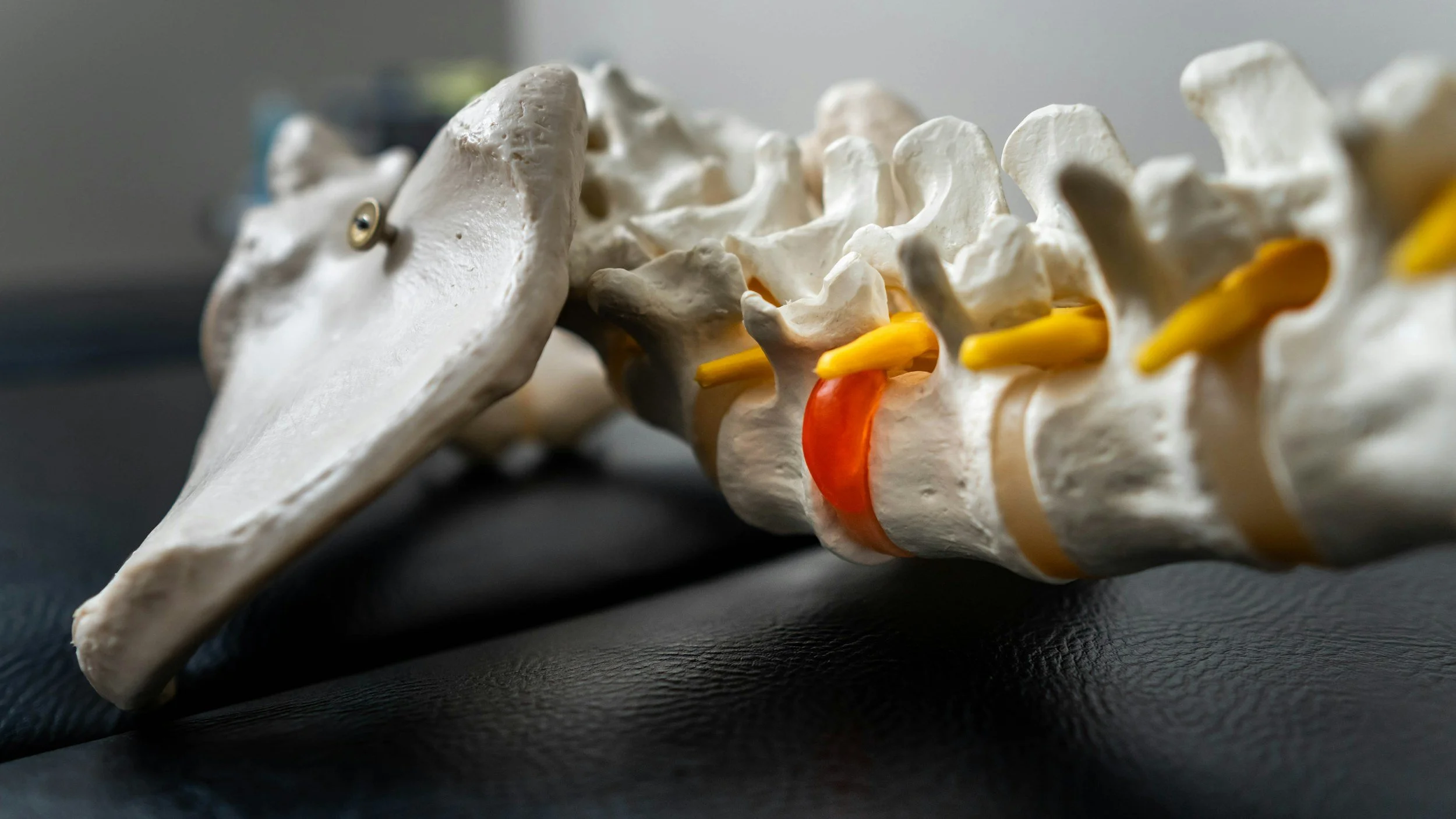
A lumbar spine model and the sciatic nerve roots
What Is Sciatica?
Sciatica is a term used to describe pain that travels along the course of the sciatic nerve. The sciatic nerve is the largest nerve in the body and runs from the lower back through the buttock and down the leg.
Symptoms may include:
Pain in the buttock or leg
Burning or shooting pain
Tingling or pins and needles
Numbness
Muscle weakness
Pain that worsens with sitting
Sciatica is not a diagnosis itself. It is a symptom that may be caused by several different underlying conditions.
What Causes Sciatica?
Several conditions can irritate or compress structures associated with the sciatic nerve.
Common causes include:
Disc Injuries: A disc bulge or disc herniation may irritate nearby nerve tissue.
Spinal Joint Dysfunction: Changes in movement or loading through the lower back may contribute to symptoms in some people.
Spinal Stenosis: Narrowing of spaces within the spine may affect nerve structures.
Piriformis Syndrome: In some cases, muscles around the hip and buttock may contribute to sciatic-like symptoms.
Reduced Physical Capacity: Weakness, deconditioning or poor tolerance to certain movements may contribute to ongoing symptoms.
Because sciatica can have multiple causes, a proper assessment is important.
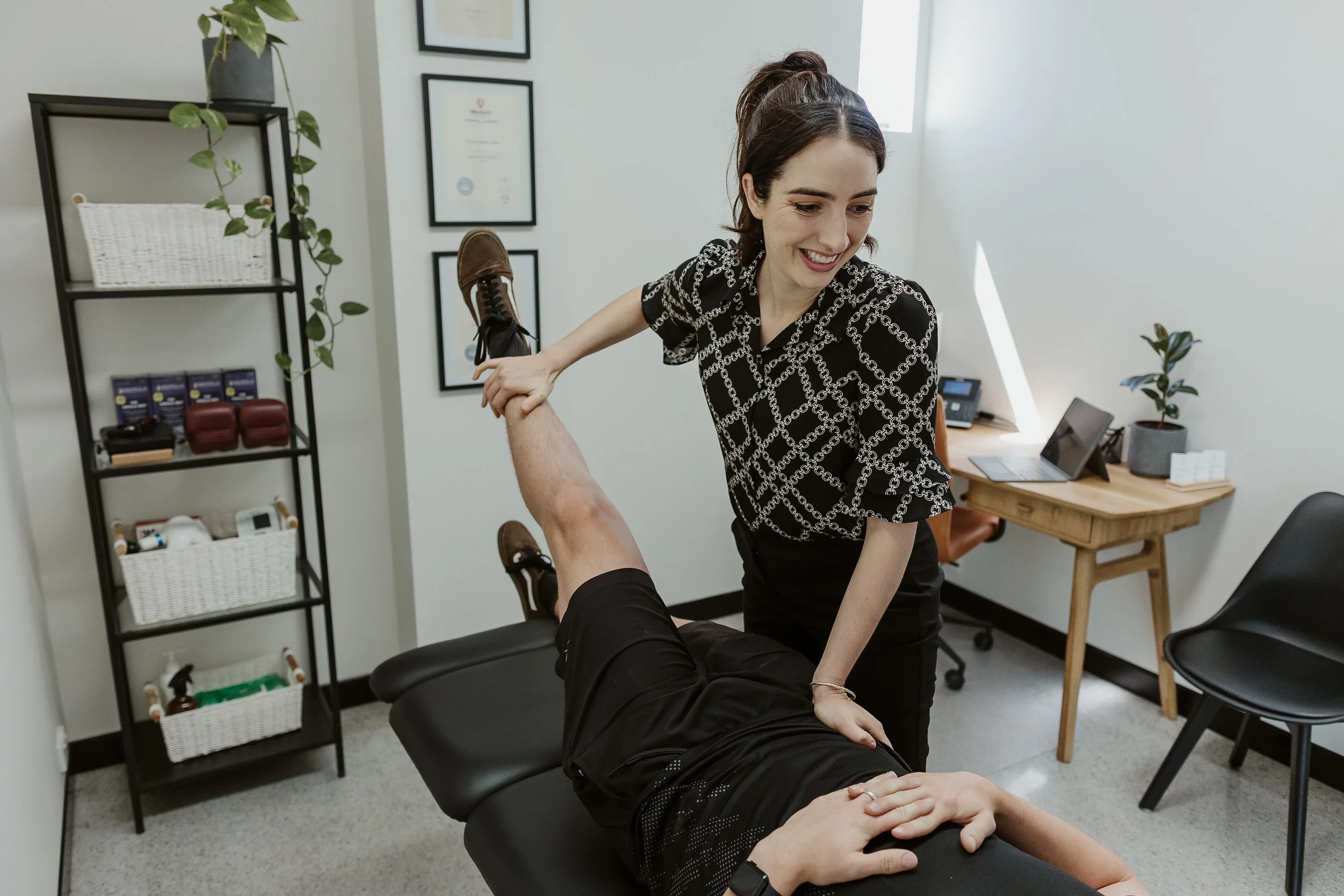
Dr Emily Bazeley Chiropractor at SPINE&SPORTS performing a straight leg raise test for sciatica
Can Chiropractic Care Help with Sciatica?
For some people, chiropractic care may help improve movement, reduce pain and support recovery.
A chiropractor will first assess:
Your symptoms
Medical history
Neurological signs
Movement patterns
Strength and mobility
Treatment recommendations will depend on the findings of your assessment.
Management may include:
Manual therapy
Joint mobilisation
Exercise prescription
Activity modification
Education
Rehabilitation strategies
In some cases, referral for imaging or collaboration with other healthcare providers may be recommended.
At Spine & Sports, chiropractic care is often integrated with sports physiotherapy when appropriate to provide a comprehensive management plan.
What Does the Research Say?
Current clinical guidelines generally recommend conservative care as a first-line approach for many people experiencing sciatica.
This may include:
Staying active where possible
Education
Exercise
Manual therapy
Structured rehabilitation
Research suggests that some people with sciatica may experience improvements with conservative management, although outcomes vary depending on the underlying cause and individual circumstances.
No single treatment works for everyone, which is why an individual assessment remains important.
Should You Rest or Keep Moving?
Many people assume complete rest is best for sciatica.
However, prolonged inactivity may sometimes contribute to stiffness, reduced strength and delayed recovery.
For many individuals, maintaining appropriate levels of movement and gradually returning to normal activities may be beneficial.
An exercise rehabilitation program can help guide this process and provide exercises suited to your specific presentation.

Clinical palpation of a lumbar spine
When Should You Seek Professional Advice?
You should consider seeking assessment if:
Symptoms are persisting
Pain is affecting work or sleep
Symptoms extend below the knee
You are experiencing numbness or weakness
Symptoms are limiting exercise or daily activities
Urgent medical assessment is recommended if symptoms are accompanied by:
Loss of bladder or bowel control
Significant leg weakness
Saddle numbness
These symptoms require immediate medical attention.
How Spine & Sports May Help
At Spine & Sports, assessment of sciatica focuses on understanding:
The likely source of symptoms
Factors contributing to irritation
Movement limitations
Strength deficits
Activity goals
Depending on your presentation, management may involve:
Movement and strength programs
Education and self-management strategies
The goal is to help you better understand your condition and support a safe return to the activities that matter most to you.
Common questions we get about Sciatica
-
Sciatica is commonly associated with irritation or compression of nerve structures, but the exact cause varies between individuals.
-
No healthcare provider can guarantee a cure. Management depends on the underlying cause, severity of symptoms and individual circumstances.
-
Recovery time varies considerably depending on the cause and individual factors.
-
For many people, walking can be beneficial, although activity levels should be tailored to symptom tolerance and professional advice.
-
Not always. Many cases can be assessed clinically. Imaging may be recommended if symptoms are severe, persistent or accompanied by concerning neurological signs.
Need your sciatica looked at?
If pain, tingling or numbness is travelling from your lower back into your leg, an assessment can help identify the likely cause and determine the most appropriate management plan. The Spine & Sports team can assess your symptoms and provide personalised advice based on your individual presentation and goals.