
Can Chiropractic Help Neck Pain?
Quick Answer
Neck pain is one of the most common musculoskeletal conditions worldwide and can affect people of all ages—from office workers and parents to athletes and tradies.
For some people, chiropractic care may help improve pain, movement and function as part of an evidence-informed management plan. The most appropriate treatment depends on the underlying cause of your symptoms, which is why a thorough assessment is an important first step.
Introduction
If you’ve ever woken up with a stiff neck, struggled to turn your head while driving or felt persistent tightness after a day at the computer, you’re certainly not alone.
Neck pain is incredibly common. Research suggests that around 30–50% of adults experience neck pain each year, making it one of the leading causes of disability worldwide.
Fortunately, most neck pain is not caused by serious disease and can often be managed successfully with conservative care.
One question we hear almost every day at Spine & Sports is:
“Can chiropractic actually help my neck pain?”
The short answer is: it may, depending on what’s causing your symptoms.
Let’s explore why.

ccervical spine vertebrae
What Is Neck Pain?
Neck pain is an umbrella term used to describe discomfort arising from the cervical spine and surrounding muscles, joints, ligaments and nerves.
Symptoms can include:
stiffness
aching
difficulty turning your head
headaches
pain between the shoulder blades
muscle tightness
pain referring to the shoulder or arm
Not all neck pain is the same.
Some people experience symptoms for a few days after sleeping awkwardly, while others develop persistent pain associated with prolonged desk work, previous injury or sporting activities.
Why Does Neck Pain Happen?
Most neck pain develops from a combination of factors rather than one single cause.
Common contributors include:
Prolonged Sitting
Long hours at a computer can increase strain on the muscles responsible for supporting your head and shoulders.
If you spend most of your day at a desk, our guide to desk worker chiropractic care may also be helpful.
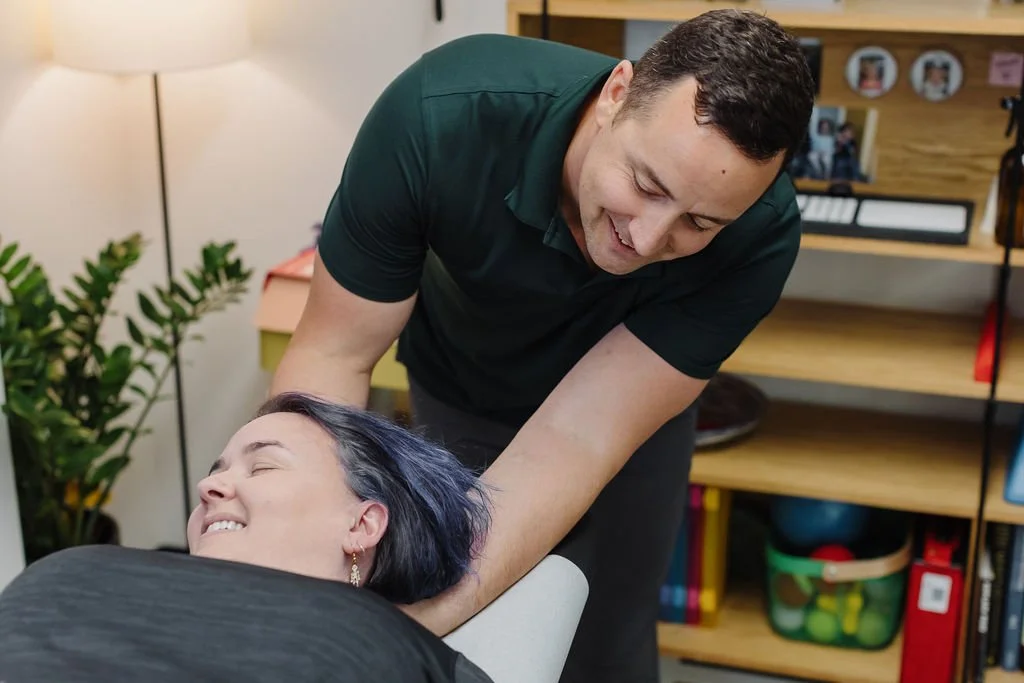
Dr Mason Bazeley, Chiropractor at SPINE&SPORTS treating the patient cervical spine
Reduced Movement
Like every joint in the body, the neck responds well to regular movement.
Long periods without changing position may contribute to stiffness and discomfort.
Sporting Activities
Contact sports, cycling, swimming, golf and strength training can all place different demands on the neck.
If your symptoms developed during training, our page on sports chiropractic explains how movement-based care may support active individuals.
Stress
Periods of increased stress are often associated with increased muscle tension around the neck and shoulders.
Pain is complex, and emotional wellbeing, sleep and recovery all play important roles in how we experience symptoms.
Previous Injury
Previous episodes of neck pain or whiplash can sometimes influence how the neck functions over time.
Can Chiropractic Help Neck Pain?
Following a thorough assessment, chiropractors may use a combination of approaches depending on your presentation.
These may include:
education
joint mobilisation
spinal manipulation where appropriate
soft tissue techniques
movement advice
exercise prescription
activity modification
Treatment is always tailored to the individual rather than following a one-size-fits-all approach.
In many cases, chiropractic care works best alongside exercise rehabilitation to help improve long-term movement capacity and resilience.

Dr Emma Cohn, chiropractor at Spine & Sports East Perth examining the patient’s neck pain
What the Research Says
One of the strengths of modern chiropractic care is that it increasingly integrates the best available research with clinical experience and patient preferences.
A 2023 systematic review published in the Journal of Orthopaedic & Sports Physical Therapy found that a combination of manual therapy and exercise can improve pain and function for many people with mechanical neck pain.
Similarly, clinical practice guidelines from the Bone and Joint Decade Task Force and more recent international recommendations support conservative care—including exercise, education and, where appropriate, manual therapy—as a first-line approach for many people with neck pain.
The key message from current evidence is not that one treatment is “best,” but that multimodal care often provides the greatest benefit.
That means combining hands-on treatment with:
movement
strengthening
education
gradual return to normal activity
rather than relying on passive treatment alone.
This approach aligns closely with how we manage neck pain at Spine & Sports.
When Might Physiotherapy Be More Appropriate?
One of the advantages of visiting a multidisciplinary clinic is having access to different professions under one roof.
Some people benefit most from chiropractic care.
Others may benefit more from sports physiotherapy, particularly when rehabilitation, strength progression or return to sport is the primary goal.
In many cases, both professions complement each other.
Red Flags: When Should You Seek Urgent Medical Care?
Although uncommon, seek urgent medical assessment if neck pain is associated with:
significant trauma
fever
unexplained weight loss
severe weakness
loss of coordination
changes in bladder or bowel function
persistent numbness affecting both arms or legs
These symptoms may require prompt medical investigation.
Common questions we get about neck pain
-
For some people, yes. The most appropriate treatment depends on the underlying cause of the stiffness and findings from your assessment.
-
Serious adverse events associated with cervical spinal manipulation are considered rare, but like any healthcare intervention, risks and benefits should be discussed with your clinician before treatment.
-
Both may be appropriate depending on your symptoms and the stage of your condition. Your clinician can advise what may be most suitable for your situation.
-
In many cases, staying active within comfortable limits is encouraged, although activity may need to be modified depending on your symptoms.
-
Posture alone is unlikely to be the sole cause of neck pain, but prolonged static positions, reduced movement and workload can contribute to symptoms in some people.
How Spine & Sports May Help
Every consultation begins with understanding why your neck is painful—not simply treating where it hurts.
Depending on your assessment, your management plan may include:
movement assessment
manual therapy
rehabilitation exercises
sports physiotherapy
remedial massage
posture and workplace advice
return-to-sport planning
If remedial massage It is appropriate as part of your care; it may complement your overall management plan by addressing muscle tension and supporting recovery.
If neck pain is affecting your work, training or daily life, an assessment can help identify the factors contributing to your symptoms and determine the most appropriate management plan.
At Spine & Sports, our chiropractors and physiotherapists work together to provide personalised, evidence-informed care designed to help you move with confidence and get back to doing what you enjoy most.