
James Cumming - Headache, neck and jaw pain Physiotherapist at SPINE&SPORTS East Perth
There is a substantial research literature, although it supports a multifactorial explanation rather than one universal psychological cause. Importantly, “jaw tightness” can reflect several overlapping phenomena: awake bruxism, sleep bruxism, protective muscle guarding from pain, temporomandibular disorder (TMD), or a learned posture such as holding the jaw rigid without the teeth touching.
The current consensus defines awake bruxism as sustained/repetitive tooth contact, jaw bracing, or mandibular thrusting while awake. Sleep bruxism is a different sleep-related muscle activity. Neither is automatically a disease; they become clinically important when they contribute to pain, impaired function, tooth damage, or other consequences. International consensus definition, 2024 definition update.
What appears to drive jaw tightening
1. Stress and emotional arousal—especially for awake clenching
Stress sensitivity, anxiety, depression, somatic vigilance, and less-effective coping correlate with awake bruxism. Real-time smartphone studies—where people repeatedly report what their jaw is doing—support this association, although effects vary considerably between people.
An unusually informative natural experiment compared young adults during peacetime and acute wartime stress. The acutely stressed group spent less time with relaxed jaw muscles; those with adjustment disorder reported more clenching and grinding. Greater psychological resilience predicted more relaxed muscle behaviour. Acute-stress EMA study.
This does not mean that clenching is necessarily “repressed anger,” trauma, or one particular emotion. Research generally measures broad constructs such as stress, anxiety, depression, coping, and hyperarousal—not reliable one-emotion-to-one-muscle mappings.
2. A learned, largely automatic motor habit
Awake clenching can become coupled to recurring contexts:
intense concentration or “effort”
screens, driving, deadlines, gaming, lifting, or precision work
suppressing speech or emotion
pain anticipation
tongue, lip, cheek, nail, or object-biting habits
Repeated contraction can become automatic and fall outside awareness. Jaw bracing without tooth contact may actually be more common than forceful clenching or grinding. In recent pooled real-time observations, relaxed jaw posture accounted for about 52% of reports, tooth contact 19%, bracing 15%, clenching 7%, and grinding only 1%. EMA metrics study.
There may also be a feedback loop:
stress or concentration → jaw bracing → fatigue/tenderness
          ↑                         ↓
     threat monitoring ← noticing pain/tightness
Once the area hurts, protective guarding and increased monitoring can maintain tightness even after the original stressor has gone.
3. Sleep arousal mechanisms
Sleep bruxism is not simply awake stress continuing during sleep. Episodes frequently cluster around brief autonomic and cortical arousals: heart rate and sympathetic activity rise, followed by rhythmic jaw-muscle activity. Obstructive sleep apnoea, reflux, restless legs, periodic limb movements, and some other sleep disorders occur more often alongside sleep bruxism, although causality is not settled. Systematic review of sleep-related disorders.
Snoring, witnessed breathing pauses, choking awakenings, morning headache, marked daytime sleepiness, or resistant hypertension make sleep-apnoea assessment particularly relevant.
4. Medication and stimulant effects
SSRIs and SNRIs can sometimes provoke jaw clenching or bruxism, often after initiation or a dose increase, although much of the evidence consists of case reports rather than strong trials. Systematic review of antidepressant-associated bruxism. Stimulants, nicotine, caffeine, alcohol, and recreational stimulants may influence it in susceptible people, but evidence strength varies.
Do not stop a prescribed medicine abruptly; a prescriber can assess timing, dose, alternatives, and other explanations.
5. Pain and protective guarding
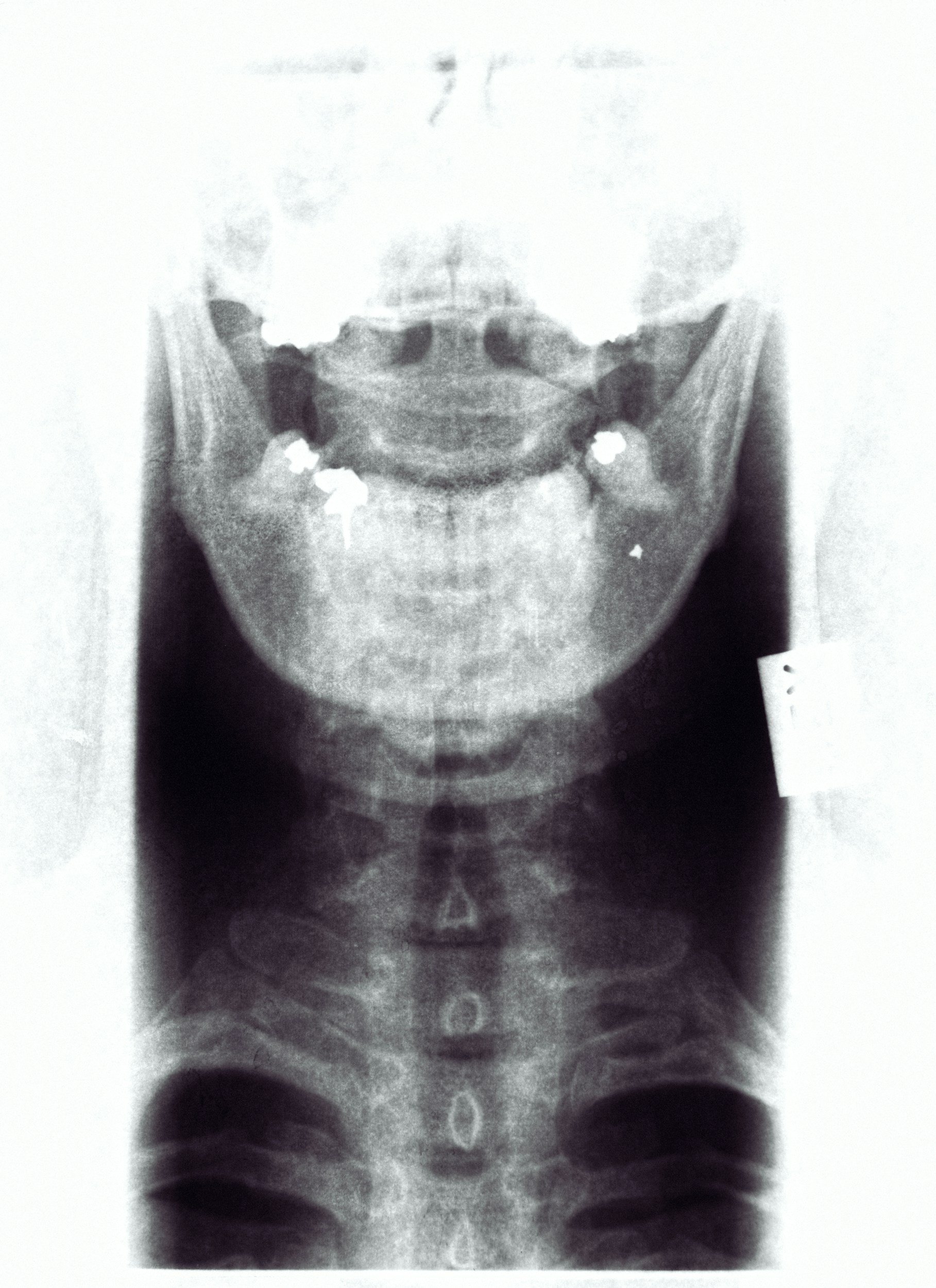
A painful tooth, irritated jaw joint, strained muscle, headache disorder, neck pain, or previous jaw injury can produce reflex guarding. Bruxism and TMD can then reinforce one another, but pain does not prove that bruxism is the original cause.
Why one side might tighten more
This question has been studied much less well. There is no established psychological rule such as “left-sided tension means one emotion.” The more defensible explanations are biomechanical and sensorimotor:
Preferred chewing side. Habitually chewing on one side trains a lateralised motor pattern and can produce asymmetric masseter activity. Bilateral EMG can reliably detect the active chewing side. Chewing-side EMG study.
Local pain or guarding. The painful side may tighten protectively—or the opposite side may work harder to unload it. Either pattern is possible.
Dental factors. A missing or painful tooth, recent filling/crown, crossbite, or a contact that makes one side feel more stable can redirect force. However, ordinary malocclusion has not been shown to be a general cause of bruxism, so irreversible bite adjustment should not be the default explanation or treatment. Systematic review and meta-analysis, causality review.
Joint or movement asymmetry. Disc displacement, restricted opening, deviation of the jaw, previous injury, or differences in joint sensitivity can recruit the two sides differently.
Posture and task habits. Resting the chin on one hand, side-sleeping, holding a phone, playing an instrument, unilateral lifting patterns, or turning toward one monitor can repeatedly bias activation.
Normal anatomy and measurement. Faces, jaw muscles, and motor recruitment are naturally somewhat asymmetric. The side that feels tighter is not necessarily the side generating the greater force; it may simply be more tender or sensitised.
Less common local pathology. Persistent unilateral swelling or progressive enlargement warrants examination because salivary-gland, dental, inflammatory, neurological, or muscular conditions can masquerade as “tension.”
A useful way to investigate your own pattern
For 7–14 days, record several random check-ins daily:
Were the teeth touching?
Was the jaw braced even without contact?
What were you doing and feeling?
Which side felt active?
Was there local tooth or joint pain?
Was it worse on waking or later in the day?
Any recent medication/dose, dental work, sleep, caffeine, or workload change?
What you can do
At rest, the usual target is lips together if comfortable, teeth apart, tongue resting lightly rather than forcefully pressing, and jaw muscles soft. Repeated gentle awareness cues are more useful than continuously checking or forcefully stretching the jaw.
Persistent one-sided symptoms are best assessed by a dentist experienced in orofacial pain/TMD or a physiotherapist with relevant training. Seek earlier evaluation for swelling, numbness or weakness, fever, trauma, inability to open normally, a new bite change, jaw locking, severe dental pain, or symptoms that are steadily worsening.