
Lifestyle Guide | Staying Well: Why Small Habits Beat Big Fixes
Most people don't stay healthy because they never experience pain again.
They stay healthy because they continue to look after their body before small problems become bigger ones.
Whether it's brushing your teeth, servicing your car or maintaining your fitness, the principle is the same: a little attention over time is usually easier than trying to recover from a major setback.
Your musculoskeletal health is no different.
Your body adapts to what you ask of it
Muscles become stronger when they're challenged.
Bones adapt to regular loading.
Tendons become more resilient with progressive exercise.
Balance and coordination improve when they're practised.
The human body is remarkably adaptable—but it also responds to inactivity.
That's why staying active is one of the most consistently recommended strategies for long-term musculoskeletal health.

ccervical spine vertebrae
What does the research say?
Current clinical guidelines consistently recommend regular physical activity and exercise as part of maintaining musculoskeletal health. Rather than avoiding movement, appropriately loading the body helps maintain strength, mobility and resilience over time.
Recovery doesn't end when the pain stops
One of the biggest misconceptions is that recovery is complete as soon as symptoms settle.
Pain often improves before strength, mobility or capacity have fully returned.
That's why continuing to build strength, improve movement and gradually return to the activities you enjoy can help reduce the likelihood of future setbacks.
For some people that means strength training.
For others it might be walking, Pilates, swimming, running or simply remaining active.
The best exercise is usually the one you'll continue doing.
When is it worth checking in?
Most small aches and pains settle with time.
But if something is lingering, keeps returning or starts limiting what you enjoy doing, it's often easier to address early than to wait until it becomes a bigger problem.
Sometimes all that's needed is reassurance.
Sometimes it's a small adjustment to your training, work habits or recovery.
Sometimes another healthcare professional is the better person to help.
The goal isn't to have treatment forever.
The goal is to keep you doing the things you enjoy with confidence.
Dr Mason Bazeley, Chiropractor at SPINE&SPORTS treating the patient cervical spine
A balanced approach to staying well
At SPINE&SPORTS, we encourage people to:
Stay physically active.
Build strength progressively.
Prioritise good sleep and recovery.
Listen to persistent changes rather than ignoring them.
Seek advice early if something doesn't seem right.
For some people, occasional reviews form part of that plan.
For others, they aren't necessary.
Like every aspect of healthcare, the most appropriate approach depends on the individual.
The bottom line
People generally stay well by continuing to load their body appropriately and checking in before small problems become big ones.
Our role isn't simply to help when you're in pain.
It's to help you understand your body, build confidence in movement and support you in staying active for the long term.
Coming soon - Related Guides
Strength Training: One of the Best Investments You Can Make for Your Spine
What Does the Research Say About Exercise for Back Pain?
Why Pilates Can Complement Chiropractic Care
What Actually Causes the "Crack" During an Adjustment?
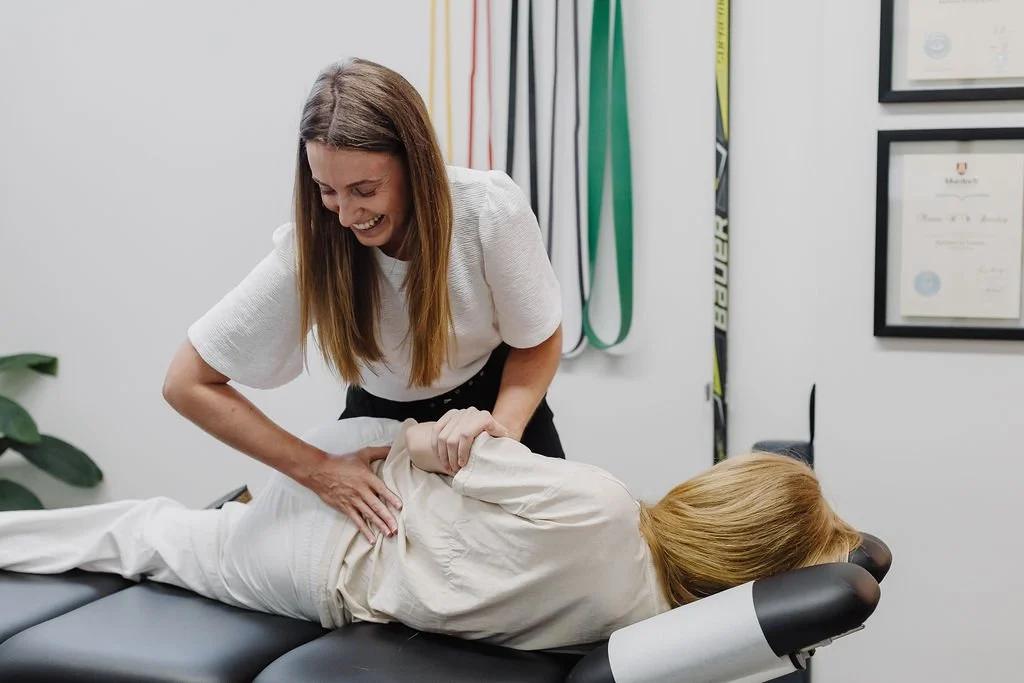
Dr Emma Cohn, chiropractor at Spine & Sports East Perth examining the patient’s neck pain